
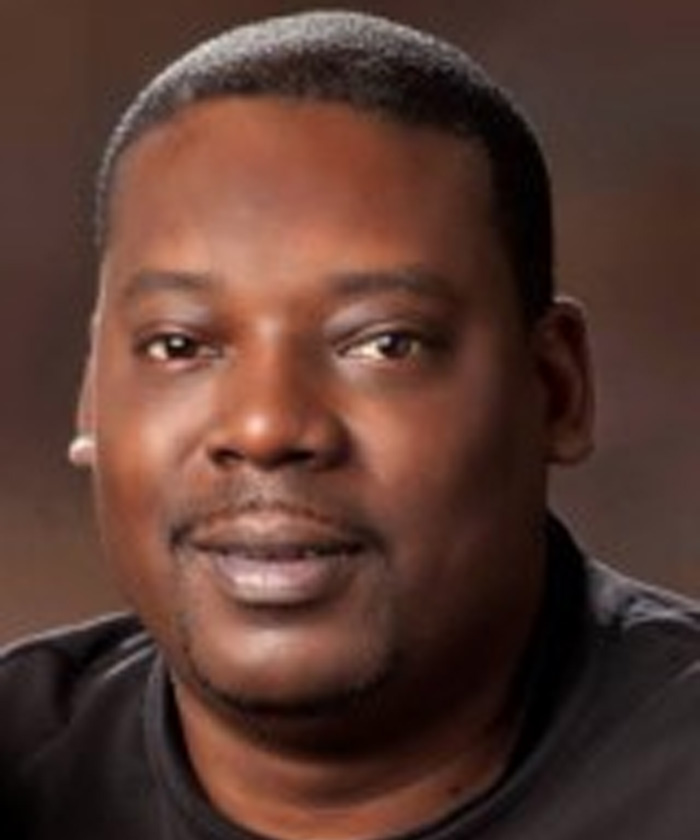
Dr. Herman Fennell, II
- Assistant Professor
- Biological Sciences
Areas of Expertise
Education
- NIH T32 Postdoctoral Fellow
Breast Cancer
University of California Davis, Sacramento, CA
Department of Biochemistry and Molecular Medicine
2012-20114 - Ph.D.
Molecular Biology
Howard University, Washington, DC
Department of Biology
2005-2012 - M.S.
Animal Health Science
North Carolina Agricultural and State University
Department of Animal Science
2000-2003 - B.Sc.
Animal Science
North Carolina Agricultural and State University
Department of Animal Science
1994-1999
Professional Positions Held
- Hampton University – current
- University of California Davis – T32 Postdoctoral Fellow
- Howard University – Graduate Assistant
About Dr. Herman Fennell, II
Dr. Fennell is an Associate Professor with expertise in breast and prostate cancer and the genetic engineering of stress resistant plants. His cancer research spans from the molecular basis of cancer to discovering bioactive compounds in plants with anti-proliferative and anti-inflammatory properties. Dr. Fennell completed his Ph.D. at Howard University. His research focused on undertaking molecular and cellular biology techniques, unraveling the role of secondary metabolites in the receptor for activated C kinase 1 mediated water stress signal transduction pathway in Arabidopsis and rice plants. Dr. Fennell deduced that the RACK1A protein is needed to create salt, drought, and oxidative resistance in Arabidopsis and rice plants. His post-doctoral research was at the University of California, Davis, in the Department of Biochemistry and Molecular Medicine as an NIH T32 fellow, researching a suspected tumor suppressor protein known as the leucine-rich repeat containing 24 protein (LRRC24). He discovered that LRRC24 is a negative regulator of the ErbB family of receptor for tyrosine kinases, which laid the groundwork for my current research at Hampton University. Dr. Fennell has conducted research at the National Institute of Health and the Smithsonian National Zoological Park. Dr. Fennell has published papers on plant stress resistance and cancer biology. Currently, he is utilizing molecular biology techniques and bioinformatics to identify novel compounds in plants with anti-carcinogenic activity. It is also important to mention that Dr. Fennell has advised, mentored, and trained > 50 undergraduate, graduate, and medical students during his career. Dr. Fennell teaches undergraduate courses in cancer biology, molecular biology, cell biology fundamentals, biology introduction, research problems, special projects, cell physiology, botany, and laboratories. He also teaches graduate courses in biochemistry and molecular cell biology. Dr. Fennell loves watching students work through challenging topics and experience the “aha moment” of clarity, which ignites a sense of joy as a professor.
Awards and Recognitions
- Hampton University Favorite Professor Award
- Professor of the Month, Hampton University
- STRIVE-C Visiting Professor Fellowship Recipient
- ASPB Minority Travel Award, Honolulu, HI
- ASPB Travel Award, Chicago, IL
- Teaching Assistantship Award
- NSF GK-12 Fellowship Award
- Smithsonian Institute National Zoological Park Minority Fellowship Award
- NIH Minority Summer Research Fellowship Award
- NIH T32 Postdoctoral Fellowship Award
Curricula Development and Teaching Assignments
- Undergraduate
- BIO 415 Fundamentals of Cell Biology
- BIO 312 Molecular Biology
- BIO 425 Research Seminar
- BIO 210 General Botany
- BIO 408 Research Problems
- BIO 423 Cancer Biology Laboratory
- BIO 103 General Biology
- Graduate
- MSD 665 Medical Molecular Cell Biology
Professional Affiliations
- American Association for Cancer Research (AACR)
- American Society of Plant Biologist (ASPB)
Publications
- Rahman MA, Fennell H, Ullah H. Receptor for Activated C Kinase1B (OsRACK1B) Impairs Fertility in Rice through NADPH-Dependent H2O2 Signaling Pathway. Int J Mol Sci. 2022 Jul 30;23(15) PubMed Central PMCID: PMC9368841.
- Adebola TM, Fennell HWW, Druitt MD, Bonin CA, Jenifer VA, van Wijnen AJ, Lewallen EA. Population-Level Patterns of Prostate Cancer Occurrence: Disparities in Virginia. Curr Mol Biol Rep. 2022 Mar;8(1):1-8. PubMed Central PMCID: PMC9337710.
- Fennell HW, Ullah H, Lewallen EA, Van Wijnen A. Arabidopsis thaliana and Oryza sativa Receptor for Activated C Kinase 1 (RACK1) mediated signaling pathway shows hypersensitivity to oxidative stress. Plant Gene. 2021 September; 27. PMID: 236544037.
- Fennell HW and Charles-Thomas, C. Anti-Prostate Cancer Activity of Plant Derived Bioactive Compounds: A Review. Molecular Biology Reports. 2019 July 17; :140-151. PMID: 198191089.
- Fennell H, Olawin A, Mizanur RM, Izumori K, Chen JG, Ullah H. Arabidopsis scaffold protein RACK1A modulates rare sugar D-allose regulated gibberellin signaling. Plant Signal Behavior. 2012 Nov;7(11):1407-10. PubMed Central PMCID: PMC3548859.