School of Science

Atmospheric and Planetary Science

Exploring Earth’s atmosphere and distant worlds.

The Department of Atmospheric and Planetary Sciences offers an immersive graduate experience for students who want to study everything from Earth’s weather and climate to the environments of other planets. Through M.S. and Ph.D. programs with concentrations in Atmospheric Sciences or Planetary Sciences—and a Space, Earth, and Atmospheric Sciences minor at the baccalaureate level—you can tailor your academic path to match your curiosity and career goals. Student learn from faculty actively engaged in research, gain experience with real-world data and scientific tools, and prepare for impactful careers in research, government agencies, industry, and the broader space and Earth science community.

News Spotlight

As shifting weather patterns grow more complex and communities worldwide grapple with the realities of climate change, students at Hampton University are rising to the challenge to advance climate research...

Degree Programs

Select a degree program to take a look at the curriculum, course requirements, and application process.

Turning satellite data and sky science into real-world impact.

Research is at the heart of the Atmospheric and Planetary Sciences experience. Intellectual vitality driven by active research is central to the university’s vision, and the department serves as a powerful hub for experiential learning and professional development. Graduate students engage in advanced, dissertation-based research that may include topics such as weather and climate processes, air quality, atmospheric chemistry, remote sensing, and planetary atmospheres, developing the analytical and technical skills needed to lead in a data-driven scientific world.

Our Team Members

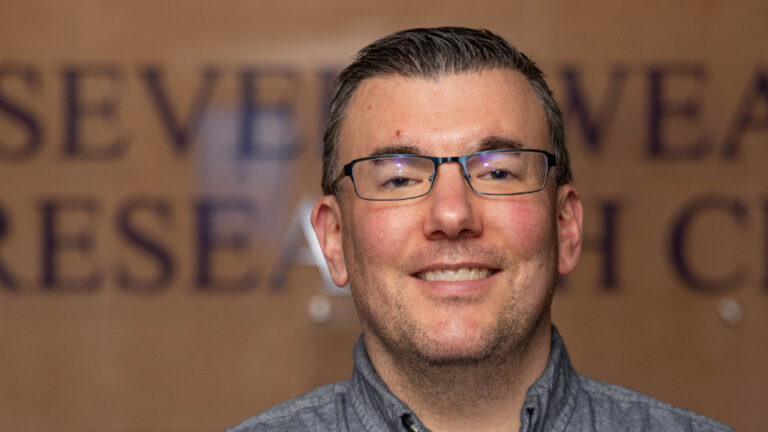
Photo of William Moore

Dr. William B. Moore

Chairperson, Professor

Dr. William B. Moore is internationally recognized for his expertise in planetary thermal and tidal dynamics. His research looks outward to our planetary neighbors to illuminate this planet’s deep past and understand what made the Earth such an interesting and dynamic place, and, of course, the only living planet. His study of Jupiter’s volcanic moon Io has led to the discovery of a new phase of terrestrial planet evolution, the heat-pipe era, that operated on Earth for roughly a billion years after its formation and that applied to each of the terrestrial planets early in their histories. He has participated in spacecraft missions to Venus (Magellan) and Jupiter (Galileo and ESA’s upcoming JUICE mission) and is co-founder of the Hampton University Severe Weather Research Center.

Dr. Moore’s scientific accomplishments include 60 refereed publications including first-author papers at Science and Nature, six collaborative papers with over 200 citations each and three first author papers with over 100 citations each. In addition to publishing widely recognized work, Dr. Moore is extending his research portfolio to extrasolar planets and planetary atmospheric evolution and dynamics. Dr. Moore’s work is interdisciplinary and interplanetary, bringing Earth, planetary, and space science together to address important questions about our planet and its ability to support life.

Dr. Moore serves on numerous committees in service to the scientific community on behalf of NASA, the National Academy of Science, and Hampton University. As part of the founding steering committee for the Outer Planets Assessment Group, he helped gather and synthesize community input on the future of Outer Planet exploration. He served as a panelist conducting the National Academy’s 2003 Solar System Exploration Decadal Survey, and also on the mid-term review of that survey, helping to assess the effectiveness of the survey process and NASA’s responsiveness to the recommendations. This review resulted in a revised process for the subsequent decadal panel. Currently, Dr. Moore represents Hampton University on the Southeastern Universities Research Association Board of Trustees, where he also chairs the Space Science and Technology committee.

Dr. Moore is dedicated to the diversification of the nation’s research enterprise and the equal distribution of its educational and scientific benefits. He is passionate about outreach and
has appeared on award-winning national and local television productions, radio, online, and in print interviews to share his enthusiasm for science and for planetary exploration in particular. He regularly leads public astronomy events in the community and at regional schools.

Photo of Jia Su

Dr. Jia Su

Associate Research Professor
Photo of John Anderson

Dr. John Anderson

Associate Research Professor

Dr. John McNabb

High Performance Computing Manager
Photo of Orenthal J. Tucker

Dr. Orenthal J. Tucker

Associate Professor
Areas of Expertise: Rarefied atmospheres, exospheres, atmospheric escape, space weather–surface interactions
Photo of Robert Loughman

Dr. Robert P. Loughman

Associate Professor
Areas of Expertise: Improving our ability to understand the Earth-atmosphere system through analysis of remote sensing data, developing new tools for modeling radiative transfer more efficiently and accurately, extending knowledge of the underlying physics of the Earth-atmosphere system to identify promising measurement strategies, and developing rigorous methods to forecast the expected performance of various retrieval systems (and to assess their actual performance using measured data).
Photo of Ruben Delgado

Dr. Ruben Delgado

Associate Professor
Areas of Expertise: Atmospheric lidar and active remote sensing, Coastal boundary layer, ducting, low-level jets & bay-/sea-breeze dynamics, Air quality, aerosols, trace-gas and smoke measurements, Integrated observing systems & sensor networks, Satellite–ground synergy (e.g., TEMPO, GOES, AERONET, PANDORA), Climate resilience for ports, coastal communities, and critical infrastructure, STEM workforce development & federal center collaborations (NASA, NOAA, DoD, EPA)

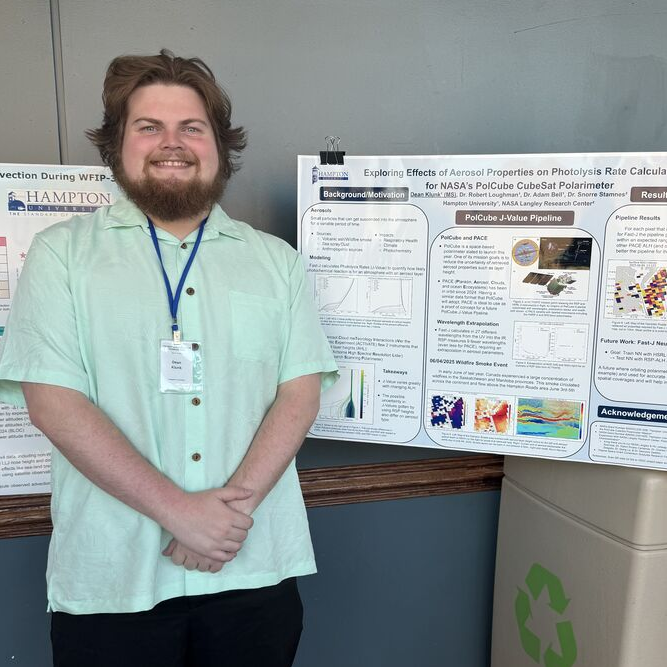
Dr. Shak Karim

Postdoctoral Research Associate
Photo of Stephen Guimond

Dr. Stephen R. Guimond

Associate Professor

Mr. Steven Price

Network Administrator

Your support fuels innovation in the School of Science. Contributions help create state‑of‑the‑art learning environments by funding new laboratories and providing advanced equipment that empowers students and faculty to push the boundaries of research and technology.