
School of Science
Pre-Health Program
Prepare for Medical and Health Professions School with Purpose, Strategy, and Excellence
A top-class pre-health experience designed to help Hampton University students build academic strength, clinical exposure, leadership and service profile, and application readiness needed to pursue graduate health and medical programs.
The Pre-Health Program is built for ambitious students who are committed to pursuing graduate health and medical degrees. It’s a structured pathway that helps students develop their professional identities as they prepare for careers in medicine, dentistry, physician assistants, physical therapy, occupational therapy, pharmacy, nursing, optometry, public health, and other health professions.
The Pre-Health Program is built for ambitious students who are committed to pursuing graduate health and medical degrees. It’s a structured pathway that helps students develop their professional identities as they prepare for careers in medicine, dentistry, physician assistants, physical therapy, occupational therapy, pharmacy, nursing, optometry, public health, and other health professions.
Degree Programs
Select a degree program to take a look at the curriculum, course requirements, and application process.
News Spotlight
- Pre-Health / Medical Science News
Today, we shine the #FutureAlumni Spotlight on Daniel Hardy ’26 💙⚓️🎓 From launching Hampton’s chapter of Black Men in White Coats, to serving as a student liaison to the Board...
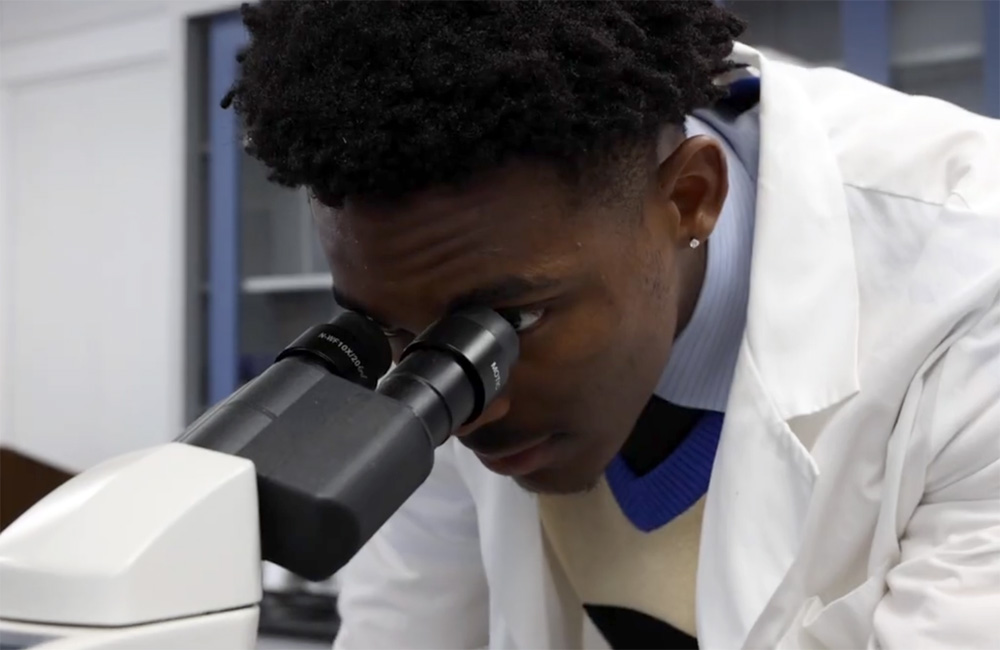
Discovering answers today for the patients you’ll treat tomorrow.
Research opportunities within the Pre-Health / Medical Science pathway connect you with faculty-driven projects that deepen your understanding of human health and disease. Whether assisting in biomedical labs, contributing to studies in public health and health disparities, or engaging in interdisciplinary science projects, you learn how evidence is generated, analyzed, and translated into better patient care.
Looking for a clearly defined roadmap into medical school?
Ambitious pre‑medical and health professions students can pursue competitive, structured pathways that blend academic rigor, clinical exposure, and early access to medical school. Explore the programs below and take the next step toward your career in medicine.
Boston University School of Medicine
Early Medical School Selection Program (EMSSP)
Program Highlights
- Provisional acceptance to Boston University School of Medicine upon successful completion of eligibility requirements after the sophomore year.
- Remain at Hampton University for the junior year while completing two intensive six‑week summer sessions in Boston that include physician shadowing and exposure to the life and work of practicing physicians.
- Senior year completed at Boston University, where you finish Hampton University degree requirements and take two medical school courses each semester while paying the Hampton University tuition rate.
- Targeted preparation through workshops in time management, study skills, medical terminology, biochemistry, MCAT preparation, and a Race, Ethnicity, and Health seminar.
- Application deadline: January 31 of the sophomore year.
Eastern Virginia Medical School
Joint BS / MD Program
Program Highlights
- Hampton University undergraduates are selected at the end of the sophomore year based on academic achievement and the strength of extracurricular and leadership activities, including research and clinical experiences.
- Participate in clinical and academic experiences at Eastern Virginia Medical School in Norfolk, Virginia during the summers before the junior and senior years.
- Upon successful completion of summer programs and continued strong academic performance, students are automatically admitted into the Eastern Virginia Medical School M.D. program.
- MCAT is not required for admission to Eastern Virginia Medical School through this program, though it is recommended for students who may apply to additional medical schools.
- The guaranteed position at Eastern Virginia Medical School is contingent upon meeting all academic and program requirements in the Joint BS/MD Program.
Meharry Medical College School of Medicine
Bachelor of Science / Doctor of Medicine (BS / MD) Program
Program Highlights
- Up to five students are selected at the end of the freshman year based on strong academic performance and a record of taking challenging courses.
- Students typically demonstrate a clear interest in health care issues and an informed understanding of the medical profession.
- Participate in an intensive six‑week summer academic and clinical enrichment program at Meharry Medical College between the freshman and sophomore years.
- Receive conditional acceptance to the Meharry Medical College School of Medicine, dependent on maintaining a minimum science GPA, continued participation in Meharry summer programs, and a competitive MCAT score.
- Applicants must apply early in the fall semester of the freshman year.
Virginia Commonwealth University School of Medicine
Guaranteed Admission Preferred Applicant Track
Program Highlights
- Each year, up to two Hampton University students may be identified in the sophomore year based on a minimum 3.5 overall GPA and 3.4 science GPA.
- Students must graduate with University Honors (Honors College) and achieve minimum MCAT scores of 26, with no individual section below 7.
- Program participants must complete required prerequisite coursework, submit AMCAS and VCU supplemental applications on a defined timeline, and maintain good academic standing at Hampton University.
- Students complete 180 hours of medically related experience and meet with the VCU School of Medicine Dean of Admissions in the summers before their junior and senior years.
- A formal offer of admission is extended once all program requirements are met; students cannot petition VCU School of Medicine if they do not adhere to the agreement.
Undergraduate Training in the Epidemiology of Prostate Cancer
Genetics of Disease Progression and Quality of Life
Program Highlights
- Collaborative research training program with the Feinstein Institute and Hofstra University in New York, funded by the Department of Defense Congressionally Directed Medical Research Programs.
- Sophomore and junior students in the School of Science and School of Pharmacy complete 8–10 weeks of paid summer research focused on prostate cancer at Hofstra University.
- Investigate racial disparities in prostate cancer treatment, access to care, and patient outcomes while building hands‑on research skills.
- Participate in a jointly taught cancer epidemiology course delivered by Hampton faculty and Feinstein Institute professionals via online sessions.
Frequently Asked Questions
What does the Hampton University Pre-Health Program offer?
It’s a structured undergraduate preparation pathway for students pursuing medical and health professions careers. It combines academic preparation, advising, experience-building, and application readiness.
Do I have to major in biology or chemistry?
Not necessarily. Students can pursue different majors as long as they complete the required prerequisites for their intended professional pathway.
Can I prepare for medical school without a gap year?
Yes. Students who plan early, build their portfolio consistently, stay strong academically, and complete major application milestones on time can be positioned to apply without a gap year. Our pre-health ecosystem is specifically built around this outcome.
When should I start shadowing and/or clinical experiences?
Students should begin exploring these experiences early, ideally during the first year or early in the second year and then build them consistently over time.
When should I begin preparing for entrance exams?
Preparation timelines vary by pathway, but students should begin early enough to avoid taking the test when they are not prepared. Our framework favors starting in the spring of the freshman year and testing during spring of the junior year for those planning not to take a gap year.
Does the program help with personal statements and applications?
Yes, our pre-health advising model integrates personal statement and application processes into the student’s individual development plan. We encourage students to start thinking about how to structure their personal statements and update the draft at the end of each semester. The pre-health office also provides resources and conduct application workshop sessions.
What if I am interested in being a physician assistant, physical therapy, dental, pharmacy, or another pathways?
The program supports multiple health professions pathways. Students should work closely with advisors to understand the specific requirements, exams, and timelines for their chosen field.
Do I need research experience?
Not every pathway requires research, but it can strengthen a student’s preparation and help demonstrate inquiry, persistence, and intellectual engagement.
What makes a student competitive?
Competitive applicants usually show strong academic performance, meaningful experience in healthcare and service, professional maturity, and a clear understanding of why they are pursuing the profession.
Can I participate if I'm still exploring my options?
Yes. The program is valuable for both committed pre-health students and those still discerning which healthcare profession best matches their strengths and calling.
How early should I build relationships for letters of recommendation?
Students should begin building strong relationships with faculty, supervisors, and mentors well before application season. We encourage identifying recommenders by sophomore year and formalizing requests before the application cycle.
Does the program support interview preparation?
Yes. Our advising model supports behavioral interviews, multiple mini-interviews, professional communication, and school-specific readiness.
Next Steps - Register for the Pre-Health Program!
Explore your potential, strengthen your skills, and prepare for a future in healthcare with Hampton University’s Pre-Health Program.
Not sure which pathway is right for you? Connect with an advisor to discuss your academic record, career goals, and timeline for medical school applications. Together, you can identify the opportunities that best match your strengths and aspirations.
Our Team Members
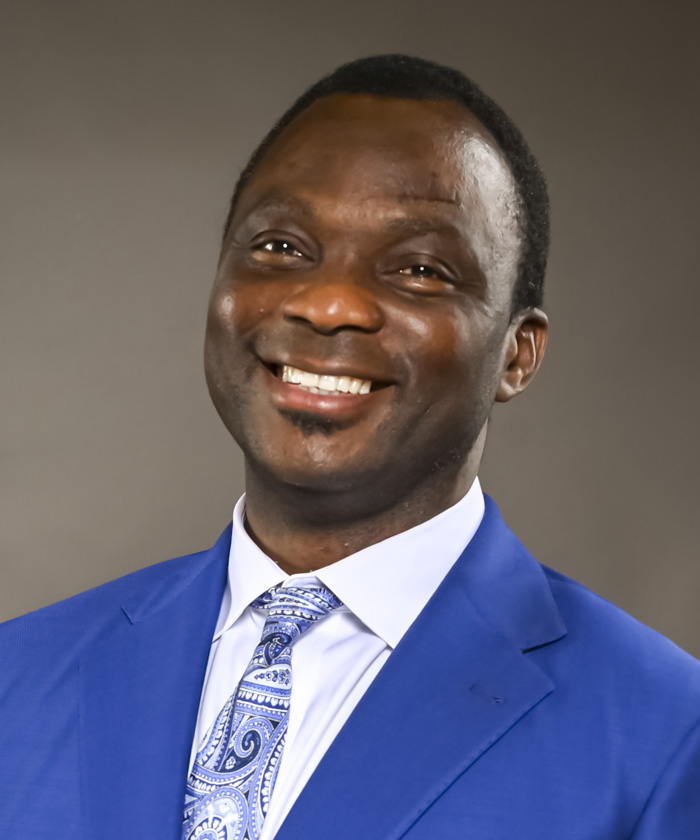
Dr. Ayodele Akinremi
Director
Dr. Ayodele Akinremi
Director
Your support fuels innovation in the School of Science. Contributions help create state‑of‑the‑art learning environments by funding new laboratories and providing advanced equipment that empowers students and faculty to push the boundaries of research and technology.