
In Orchard Hall, leadership lives behind an open door.
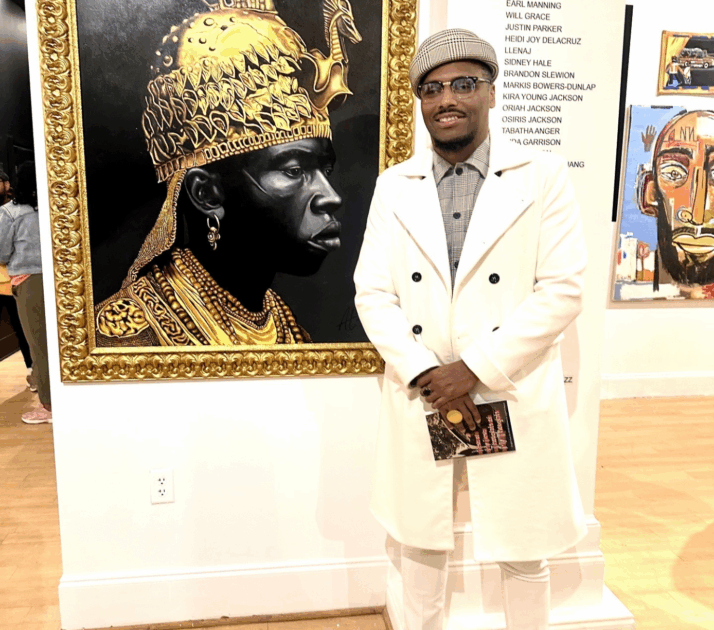
By day, Angelo Hopson serves as a Residence Hall Director at Hampton University. Hopson’s interactions offer mentorship and a steady presence to the students he leads. By night, he’s an author and artist whose words travel far beyond campus walls. His advocacy, artistry, and work sit at the intersection of accountability and aspiration, where potential is refined into purpose.
Hopson is the author of Higher Learning: Success Manual for the African American College Student, a guide born not from theory, but from lived experience. The book has garnered national attention, with features in outlets such as HBCU Buzz and profiles highlighting his impact at Central State University. Yet for Hopson, recognition is secondary. The real milestone is transformation.
From Probation to Purpose
Three years ago, while working in Dayton Public Schools and later as a student success coach, Hopson encountered a pattern that would reshape his manuscript and his mission.
Students weren’t failing because they lacked intelligence. They were struggling because they lacked structure, mentorship, and reinforcement of their own leadership capacity. Many came from under-resourced school systems. Some were navigating academic probations. Most were navigating life.
He realized that writing a scholarship guide would be incomplete. Students didn’t just need help finding funding; they needed help finding themselves.
So, the book evolved. What began as academic instruction became a full blueprint for discipline, confidence, decision-making, soft skills, and vision. Hopson focused on restoring self-belief first. Once students regained confidence, grades improved. Internships followed. Career paths clarified. Leadership emerged.
His goal was never to produce scholars alone. It was to cultivate global leaders.
A Mentor in Paperback Form
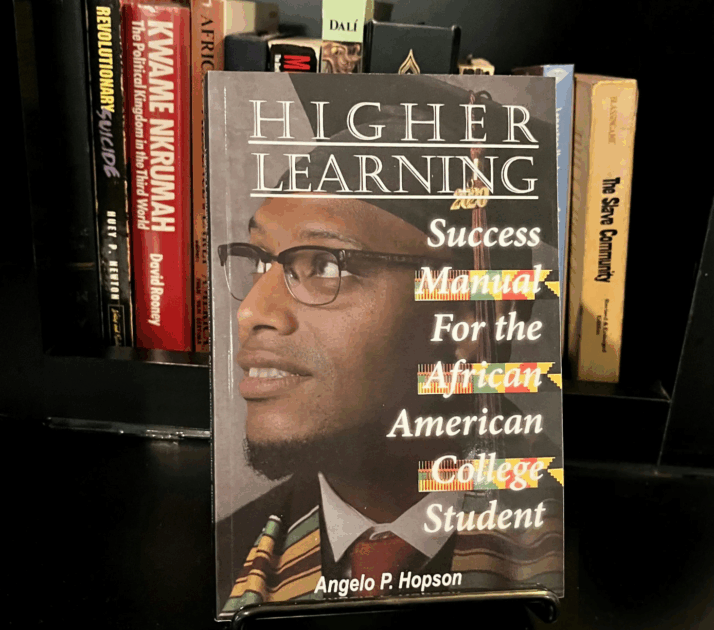
Hopson understands the spectrum of student experience because he has lived in it. He describes himself as having been both an underachiever and a scholar. That dual perspective allows him to speak to first-generation college students and legacy families alike. His message is direct: excellence is a choice reinforced daily through habits, community, and accountability.
At Hampton, he sees students drawn to a tradition of distinction that’s felt as much as it’s spoken. He believes institutions shape ambition not just through programming, but through culture and through what students see modeled around them.
“Everyone has something to say about our youth,” he often notes. “Not enough people are doing something to empower them.”
His approach is simple: light a candle. Build solutions. Mentor intentionally. If each person contributes, no one must carry the burden alone.
Preparing Students for a Changing World
Hopson’s philosophy is also forward-facing. He speaks often about automation, economic shifts, and the urgency of preparing Black and Brown students for industries that are evolving in real time. For him, higher education isn’t just about earning a degree. It’s about building networks, sharpening adaptability, and mastering soft skills that technology cannot replace.
He challenges one of the most persistent myths students bring to campus: that college is “hard.” In his view, students often confuse challenges with impossibility. The difference lies in resource utilization. Tutoring centers, career services, health resources are not safety nets for the struggling; they’re accelerators for the serious.
The students who thrive, he says, are those who engage fully.
Soft Skills as Superpower

If pressed to name the most overlooked ingredient in student success, Hopson points to soft skills.
Academic excellence matters. But without communication, teamwork, emotional intelligence, and adaptability, even the brightest transcript stalls. In a digital age where social media can foster isolation, he emphasizes the power of interpersonal connection.
Adaptability, he insists, is a superpower.
For the students he mentors, particularly young Black men navigating complex social and political landscapes, learning to pivot, collaborate, and think strategically is as critical as any exam.
A Milestone Rooted in Service
Angelo Hopson’s milestone isn’t defined by publication alone. It’s measured in reclaimed GPAs, renewed confidence, and students who begin to see themselves as architects of their own futures.
As a Residence Director at Hampton, his impact is immediate and personal. As an author, his reach extends nationally. In both roles, his mission is consistent: to challenge students to rise, to equip them with tools that endure, and to remind them that leadership begins within.
In Orchard Hall and beyond, he continues to turn lived experience into lasting guidance—one conversation, one chapter, one student at a time.
ABOUT HAMPTON UNIVERSITY
Hampton University is a prestigious Carnegie R2-designated research institution, nationally acclaimed for pioneering work in atmospheric science, cancer treatment, and cybersecurity. With an annual economic impact of $530 million across the region and the Commonwealth of Virginia, Hampton stands as a powerful engine of innovation, workforce development, and inclusive economic growth.
Consistently recognized for academic excellence and transformative outcomes, Hampton was recently named one of the “Best Colleges in America” by Money Magazine and honored as the “Best Private College” by Coastal Virginia Magazine.
Founded in 1868, Hampton University is a proud, close-knit community of scholars, representing 44 states and 32 territories. With a legacy rooted in empowerment and education, the university is committed to nurturing intellectual curiosity, critical thinking, and global citizenship — preparing students to lead with purpose and integrity in an ever-changing world. Learn more at: www.hamptonu.edu
For media inquiries, please contact Mahogany Waldon in the Office of University Relations at universityrelations@hamptonu.edu.
