
Professor Brarailty “Rel” Dowdell is leading a cinematic vanguard while defining Hampton’s place in entertainment and the study of film.
A Creative Calling Rooted in Early Inspiration
Professor Brarailty “Rel” Dowdell, Director of Hampton University’s Film Studies Program, discovered his passion for storytelling in the heart of Philadelphia. Growing up in the bustling City of Brotherhood, Dowdell would often spend his time visiting theatres as well as watching countless VHS tapes and laserdiscs, becoming immersed in the onscreen dynamics of actors and actresses of color – often in ways he hadn’t seen before.
As a young viewer encountering classic films like Cooley High and The Learning Tree, he saw Black stories portrayed with depth, cultural responsibility, and deep emotional range. Those films revealed the power of narrative to affirm identity and broaden perspective, inspiring him to pursue filmmaking as a lifelong calling.
Dowdell went on to create his debut feature, Train Ride, a movie that stands as a defining contribution to African American cinema and HBCU history. The film, which was recently recognized by Essence Magazine as one of the greatest HBCU films produced, required emotional resilience from the cast and crew alike. It also gave first leading role opportunities to now acclaimed veteran actors Wood Harris and Russell Hornsby.
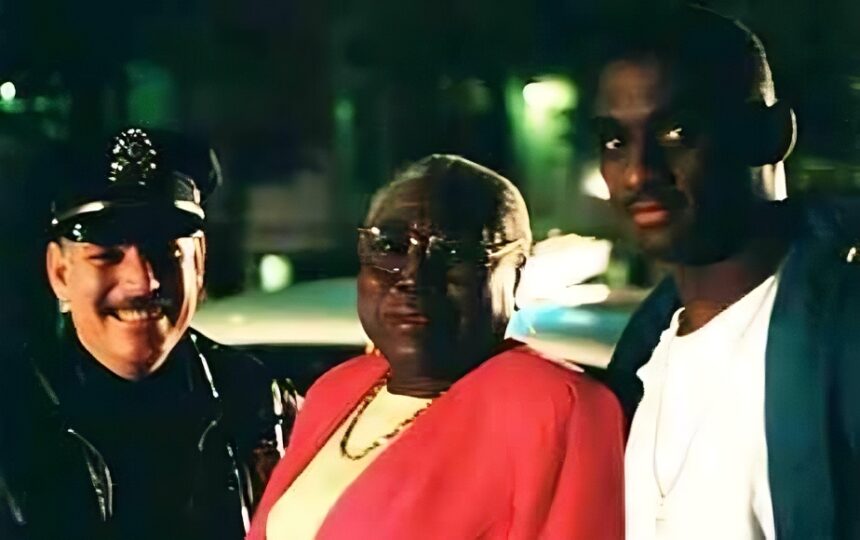
Additionally, the movie was MC Lyte’s first major dramatic role and the final performance of the iconic Esther Rolle. Despite undergoing dialysis, Rolle traveled to Philadelphia to portray the Dean of Students, bringing her signature strength and grace to the production. Dowdell dedicated the film to her memory, honoring her legacy and the commitment she showed to the project.
“Train Ride taught me that every narrative is an opportunity to interrogate society,” said Dowdell.
“As a filmmaker and an academic, I’m committed to helping students analyze the world with both rigor and empathy while honoring those that came before us. The film’s themes continue to inform my research on justice, culture, and the power of narrative to shift perspectives.”
The Storytelling Power of HBCUs
Dowdell often emphasizes that HBCUs hold an unparalleled archive of lived experience. Their histories, challenges, triumphs, and cultural richness offer limitless opportunities for authentic storytelling.
He believes that any film grounded in the HBCU environment must carry intention and a strong moral voice, reflecting the communities that shaped it. To him, these campuses offer narratives that are not only artistically compelling but historically essential.
HBCUs are not only epicenters of academic rigor but are also spaces where creatives can draw inspiration. Dowdell encourages students to allow their surroundings to stimulate their work.
“A casual stroll across one of our historic and picturesque campuses can lead to a resonant story that can last a lifetime,” remarked Dowdell.
“The key is to make sure that the narrative has a moral compass or lesson that needs to be heard and subsequently heeded.”
Countless HBCU stories have redefined filmmaking. From Spike Lee’s School Daze to Drumline, Stomp the Yard, Train Ride, and others, filmmakers have challenged and shaped the perspective of Black colleges and universities through the lens of a camera.
A Modern, Expanding Film Program at Hampton University
Hampton University stands among a select group of HBCUs offering bachelor’s degrees in film. With the new offering of a B.A. in Film Studies, Hampton continues to elevate its academic and creative infrastructure to meet industry expectations.
The alignment of support from President Darrell K. Williams, School of Liberal Arts and Education Dean Dr. Linda Malone-Colon, and other university peers has strengthened the program’s foundation, ensuring students are working with modern equipment, relevant instruction, and access to practitioners who define excellence in the field.
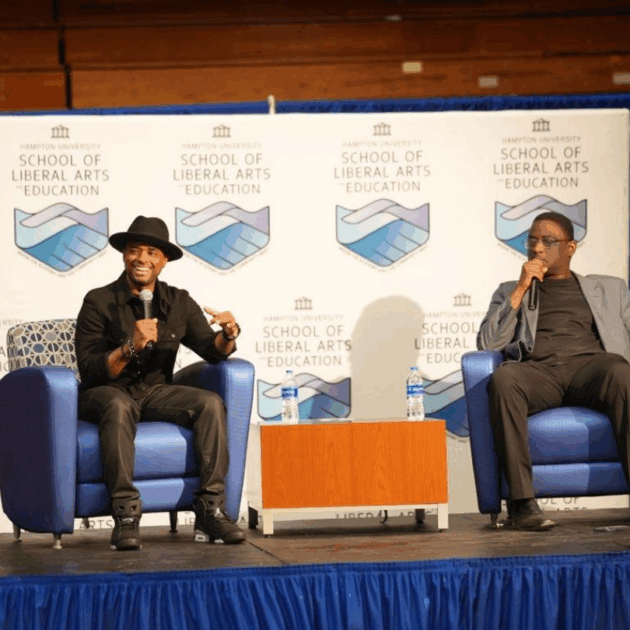
Guest engagements include Ving Rhames, Keith David, Larenz Tate, Roger Guenveur Smith, and the late Tony Todd—providing students with rare, candid exposure to the realities of the industry.
Cultivating the Next Generation of Filmmakers
Dowdell describes filmmaking as a journey that requires vision, stamina, and a deep sense of purpose. He’s proud of the students who chose this path, noting that Hampton filmmakers have gone on to top graduate programs, major studio productions, and independent film ventures. He encourages his students to commit to work they believe in and to understand the emotional and intellectual responsibility that comes with shaping stories for broad audiences. There is now a noteworthy and resourceful Student Film Organization whose membership has grown exponentially every year.
Dowdell has experienced firsthand the evolution of filmmaking, from large analog equipment when he first began his career, to the nimble tools available today. As technological advances in scripting, storyboarding, editing, and marketing continue to shift the landscape of cinema, Dowdell prefers a more traditional approach to filmmaking. He believes the core of filmmaking must remain rooted in human experience, cultural truth, and personal narrative. Technology, in his view, should enhance the work—not define it.
“Back when I was in graduate film school, we made films with big, bulky cameras and cut the films on large editing beds called Steenbecks,” said Dowdell.
“It was often a cumbersome experience. Since graduate film school is so expensive, you make the best of it. However, today, you can make a very competent entire film on your cell phone. That’s quintessential evolution for real!”
“I’m not against AI, but it should be used ethically to tell stories and while our students are learning how to use those tools, a great story truly comes from the heart of a human whose emotions illuminate on every single page.”
A Vision Anchored in Humanity and Purpose
Dowdell’s creative motivation continues to come from observation, connection, and a desire to create work that resonates across time. Under his leadership, Hampton University’s Film Studies Program merges tradition with innovation, preparing students to lead with intention and artistic integrity.
As the film industry continues to evolve, Hampton remains committed to elevating stories that reflect the fullness of the African American experience and advancing a new generation of filmmakers who are ready to shape the future of storytelling.
