
Our History
You may have heard of the Tuskegee Airmen, but did you know many Black aviators who taught them how to fly came from Hampton University, which was known as Hampton Institute at the time? Hampton is heavily tied to Tuskegee, as Booker T. Washington graduated from Hampton Institute and went on to found Tuskegee Institute, now hailed as Tuskegee University.
President Franklin D. Roosevelt signed the Civilian Pilot Training Act of 1939 into law, which created the Civilian Pilot Training Program (CPTP). The program aimed to train 20,000 civilian pilots to create a pool of potential military pilots for World War II. By the end of 1944, the program had successfully trained over 435,000 pilots.
The Department of Aviation was officially founded in 1985, yet it can be traced back to the 1940s, as one of the only six HBCUs that participated in the Civilian Pilot Training Program. Out of the 1,007 documented Tuskegee Airmen, several of them attended and graduated from Hampton Institute for their initial pilot training before heading off to Tuskegee.
Today, Hampton University continues to send aviators and aviation professionals into the field, diversifying aviation for generations to come.
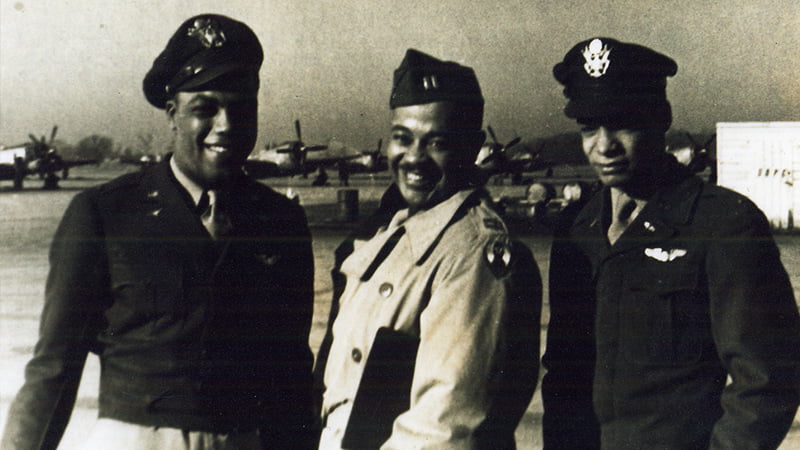
Lt. Co. James Alonzo Walker
James Alonzo Walker was from Manning, South Carolina. He graduated from Hampton Institute before joining the Tuskegee Airmen with 90 hours of flight time. Walker enlisted as a cadet and joined the military service in July 1941. He was assigned to the 99th Pursuit Squadron, 332nd Fighter Group in 1942.
Walker flew the P-40 Warhawk in more than 102 missions in the European Theatre of WWII, and was shot down in action over Serbia at the time occupied Kingdom of Yugoslavia by the Third Reich (Germany).
Walker became the first African American commander of an unsegregated unit in 1950. He served in the military until 1964, with 26 years of service, and eventually retired with the rank of Lieutenant Colonel.
James A. Walker was awarded an Air Medal, the 2006 Congressional Gold Medal, and the Distinguished Flying Cross for his acts of heroism during aerial battles.
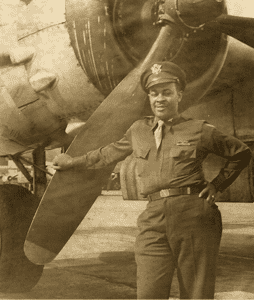
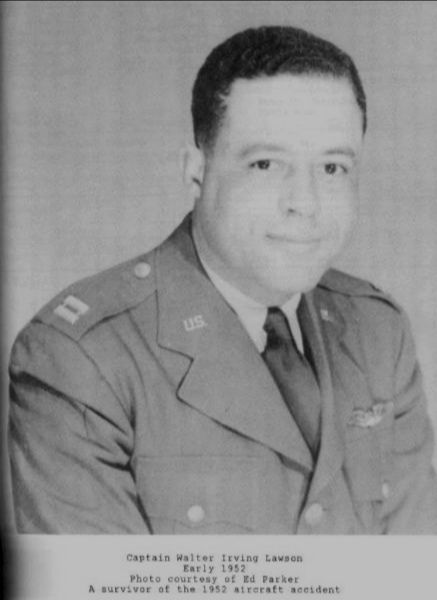
Cap. Walter Irving "Ghost" Lawson
Walter Irving “Ghost” Lawson was from Chancellor, Virginia, in Spotsylvania County. His parents were both proud Hampton alumni, and he followed in their footsteps, studying as an automobile mechanic at Hampton Institute.
Lawson enrolled at Tuskegee Institute in 1942 and graduated later that year as a member of the fifth Cadet Class Single Engine Section, and was commissioned as a 2nd Lieutenant. He served as a combat fighter pilot with the 332nd Fighter Group’s 99th Pursuit Squadron, best known as the Red Tails.
His service number was 0–791783. Lawson was one of America’s first thirty-four African American combat fighter pilots. He notably distinguished himself as one of their most aggressive and daring pilots.
Lawson was married to Cleo Hightower Lawson until his untimely death as a Captain when his plane skidded off the runway and exploded, killing him and five other crew members in 1952. Walter Irving Lawson was awarded the 2006 Congressional Gold Medal for his service and bravery.
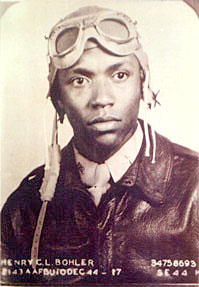
Henry Cabot Lodge Bohler
Henry Cabot Lodge Bohler was from August, Georgia, where he met his wife. He trained at the Tuskegee Army Air Field, where he learned to fly the P-51 Mustang. However, by the time he earned his wings, the military no longer needed any more pilots. He served until 1947 and retired as a second lieutenant, and finished college at Hampton University.
Bohler spoke at local schools with other Tuskegee Airmen; he was an inspiration to local pilots. He flew himself to the annual Tuskegee Airmen reunions in his Piper Archer.
Additionally, Bohler became the first licensed electrician in Tampa, opening a successful business.
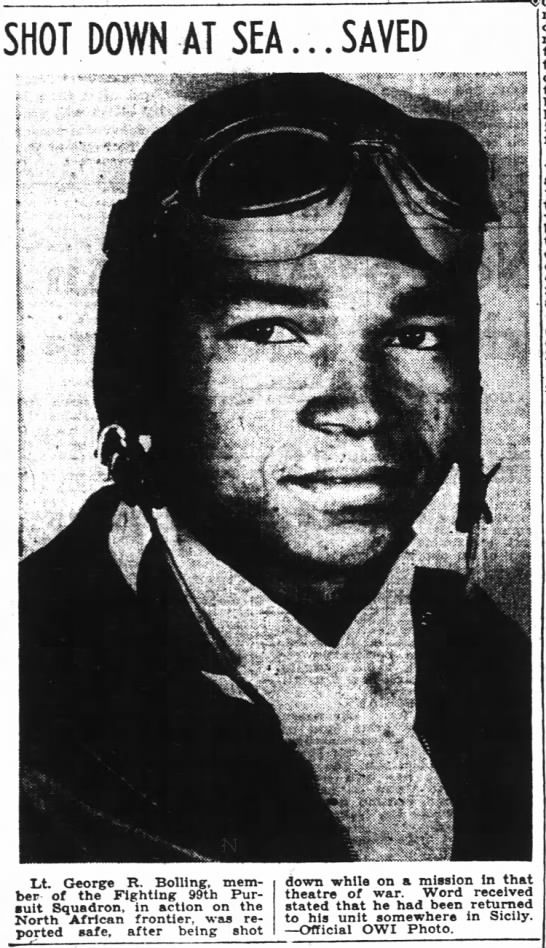
Maj. George Richard Bolling
George Richard Bolling was born in 1920 in Hampton, Virginia. Both of his siblings went on to work at Hampton Institute, and he majored in engineering, graduating in 1940.
George Richard Bolling I (August 4, 1920 – March 22, 2007) was a U.S. Army Air Force/U.S. Air Force officer and combat fighter pilot with the 332nd Fighter Group’s 99th Fighter Squadron, best known as the famed Tuskegee Airmen. He was one of 1,007 documented Tuskegee Airmen Pilots.
Bolling was recruited into the U.S. Army Air Corps and graduated from the Tuskegee Flight School’s Single Engine Section Cadet Class SE-42-F on July 3, 1942. He was commissioned as a 2nd Lieutenant and assigned to the 332nd Fighter Group’s 99th Fighter Squadron.
He retired from the U.S. Air Force as a Major in 1961 and joined the U.S. Postal Service in San Jose, California, where he worked for 20 years.
Roscoe “Coach” Draper
Roscoe DuBois Draper was from Haverford, Pennsylvania. He continued his education after graduating from high school at Hampton Institute, where he received his private pilot’s license in 1940 after enrolling in the Civilian Pilot Training Program in 1939.
Draper completed his pilot training in 1942 at Tuskegee Institute, now Tuskegee University, and was one of the first 10 men of color selected to serve as a flight instructor for the “Tuskegee Experiment.” He taught the primary phase of flight training at Moton Field, where his students nicknamed him “Coach” because of his distinct teaching style.
Another notable flight instructor who is renowned as the Father of Black Aviation, “Chief” Charles Alfred Anderson, mentored Draper as they trained the famed Tuskegee Airmen.
Additionally, Draper served on the academic board for the Tuskegee Institute and was honorably discharged in November 1945. In 1970, Draper began working as an FAA pilot examiner and an accident investigator.
Draper was awarded the 2007 Congressional Gold Medal; he taught more than 900 Tuskegee Airmen and was one of the last living members of the Civilian Pilot Training Program. Coach recently passed away on October 31, 2024, at the remarkable age of 105. He was believed to be America’s oldest surviving military pilot from the CPTP of 1940.
Edward A. Gibbs
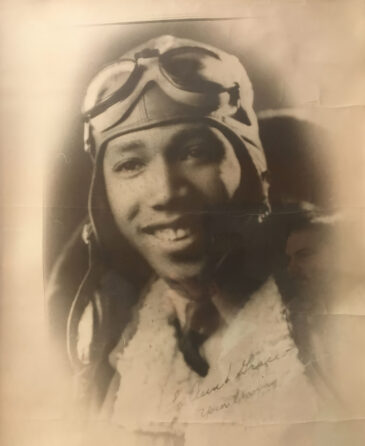
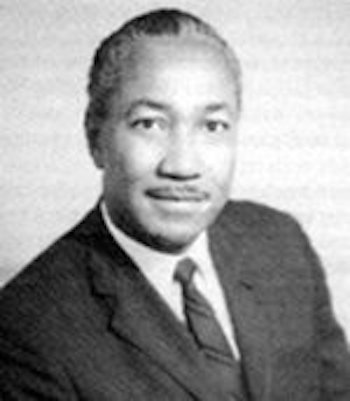
Edward Albertis Gibbs was from New York City, earning his Bachelor’s in Business from New York University and a Juris Doctorate Degree from New York Law School. He later completed the Civilian Pilot Training Program at Hampton Institute, earning his flight instructor rating. Gibbs instructed for the Schumaker Flying Service and taught at the Coffey School of Aviation in Oaklawn, Illinois. He went on to serve as a flight instructor in the U.S. Aviation Cadet program at the Army Air Corps base in Tuskegee during World War II.
Gibbs became a commanding officer of the 332nd Fight Group’s 302nd Fighter Squadron, flying over 70 missions throughout Europe until he was sent back to the U.S. in 1945. Gibbs’ aviation business suffered due to financial sabotage and discrimination, so he called together pilots and friends to promote aviation in the Black community in 1976. He founded the Stick and Rudder Club of New York, Inc. before founding and organizing the Negro Airmen International, Inc (NAI).
Many of the present African-American aviation organizations rooted from the NAI, such as the Tuskegee Airmen Inc. in 1973, the Organization of Black Airline Pilots (OBAP), and Black Pilots of America in 1997. NAI is the oldest African American civilian aviation organization in the country, growing from a small group to a national organization with 31 chapters and hundreds of members.
Vernon V. Haywood was born and raised in Raleigh, North Carolina. He attended Hampton Institute, where he obtained his private pilot’s license through the Civilian Pilot Training Program. He then attended Tuskegee Army Air Field’s secondary aviation cadet training, where he graduated on April 29, 1943, and was commissioned as a 2nd Lieutenant.
He later became a commanding officer of the 332nd Fighter Group’s 302nd Fighter Squadron, a component of the Tuskegee Airmen.
Haywood flew 70 missions throughout Europe in World War II’s European Theater, until he was sent back to the U.S. in 1945.
After World War II
Haywood became the Assistant Director at the Tuskegee Air Field Instrument School until he was assigned to the 477th Bombardment Group at Lockbourne AFB after the U.S. Army Air Corps closed Tuskegee’s training program in 1946.
In 1949, Haywood was transferred to Arizona’s Williams AFB to train jet pilots, becoming one of the first African American jet pilots and jet instructors in the U.S. Air Force. He finally retired as a colonel on October 17, 1971, logging over 6,000 flight hours. Years after, Haywood graduated from the University of Arizona with a Bachelors of Science in 1976.
Awards and Honors
Haywood was awarded the Legion of Merit, Distinguished Flying Cross, Air Medal, Commendation Medal, Euro-Africa-Middle Eastern Campaign Medal, Korean Service Medal, Vietnam Service Medal, and the Air Force Longevity Service Ribbon.
In 1993, the Arizona Aviation Hall of Fame selected Haywood as a member, and the General Assembly of North Carolina filed a joint house resolution to honor him and fellow Tuskegee Airmen from North Carolina. He died on April 14, 2003, and is buried at Arlington National Cemetery in Arlington, Virginia.
Vernon V. Haywood
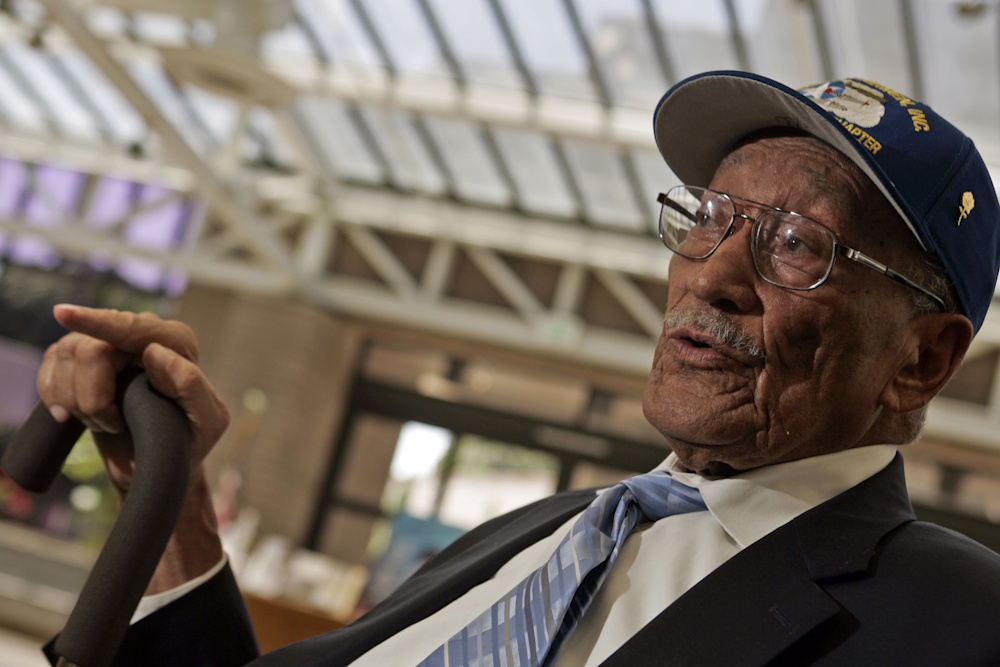
Jerry T. Hodges, Jr.
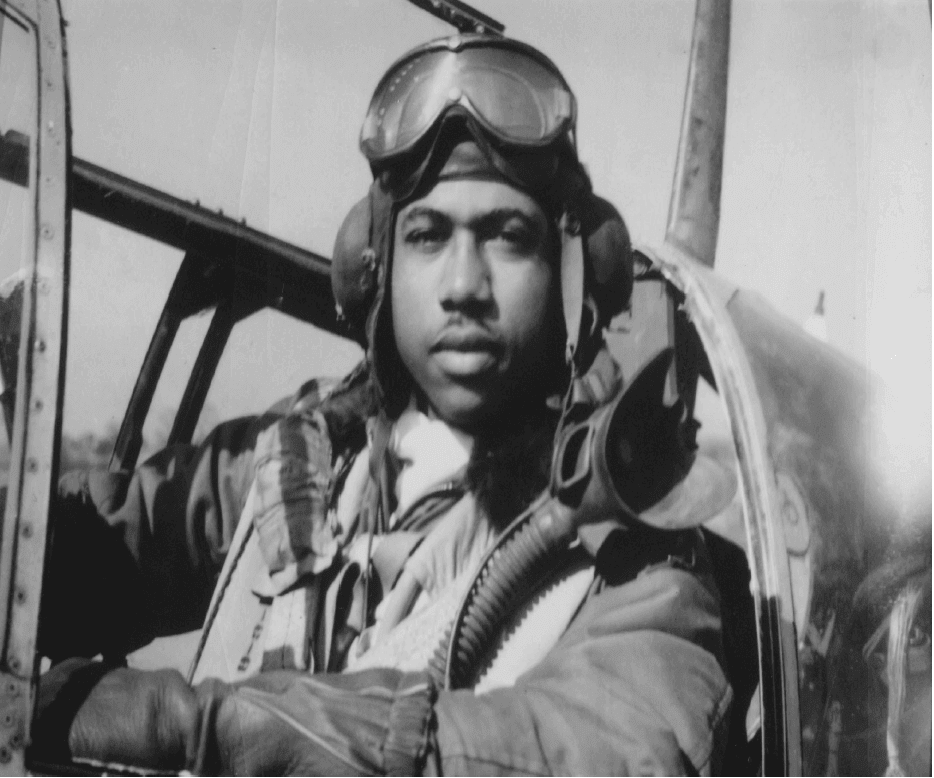
Jerry T. Hodges, Jr. was born in Memphis, Tennessee, and raised in Arkansas. He graduated as valedictorian in 1943, then attended Hampton Institute for three semesters before leaving to enlist in the Army Air Corps to pursue aviation further. He completed his training at Tuskegee Army Air Field on September 8, 1945. Hodges was transferred to Lockbourne Air Base the following year where he served the 617th Bomb Squadron of the 477th Bomber Group, yet he never flew any combat missions as it was near the end of World War II.
After the military, Hodges completed his Bachelor’s in Business at the University of Southern California (USC) in 1950. He pursued a career in accounting, becoming vice president of Casualty Insurance Company, one of the first African-American-owned insurance companies in California. He later opened his own accounting business and was very successful. He was one of the founders of the Los Angeles Branch of the David Rockefeller Interracial Council on Business Opportunity.
Also, Hodges finally reunited with his flight instructor, Roscoe “Coach” Draper after 80 years.
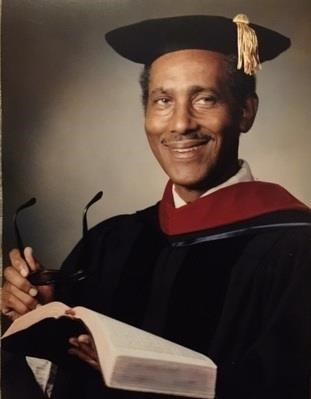
Rev. Dr. Milton Leroy Holmes
Milton Leroy Holmes was from Baltimore, Maryland, and attended Hampton Institute as he believed education was the ticket out of his poverty-stricken community. He completed his pilot training yet was never deployed as it was near the end of World War II. Holmes published a memoir titled, “Memories of the Unexpected: The Story of a Tuskegee Airman,” in 2013. He passed away on November 2, 2018.
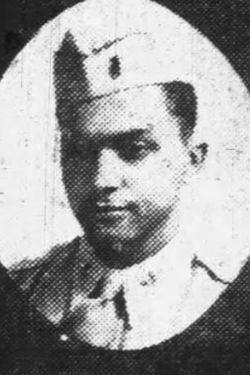
Dr. Willis J. Hubert
Willis J. Hubert was from Savannah, Georgia, and he earned his Bachelor’s degree from Hampton University in 1940. He joined the U.S. Air Force in 1943 and trained at the Tuskegee Army Air Field. He became the first African American to earn a Master’s and Ph.D. while on active duty, as well as complete the Harvard Business School Statistics Training Program. He ended his military career as a Lieutenant Colonel.
Dr. Hubert became the Academic Dean and later the Vice President of Academic Affairs at Morehouse College. He was a founding member of the Atlanta TAI, a member of the Alpha Phi Alpha Fraternity, and an active member of several professional organizations. Additionally, he was awarded the 2007 Congressional Gold Medal to honor his service as a Tuskegee Airman.
Wilmore B. Leonard
Wilmore B. Leonard was from Salisbury, Maryland, and he graduated from Hampton Institute in 1939 as a Captain in the ROTC program. He went on to graduate from the Tuskegee Flight School’s Single Engine Section Class on September 6, 1942, earning his wings and a commission as a 2nd Lieutenant. He was among the first 50 African American combat fighter pilots, and left the military as a Captain in 1946.
Captain Leonard was awarded the 2006 Congressional Gold Medal to honor his service as a Tuskegee Airman.
In 1948, Leonard attended Howard University to pursue dentistry and graduated in 1952. He worked as a professor there for 25 years until his retirement in 1976, and the university awarded him the Howard University College of Dentistry Alumni Award for his outstanding contributions to education. He passed away on April 2, 1978.
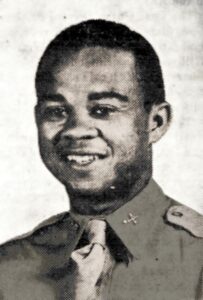
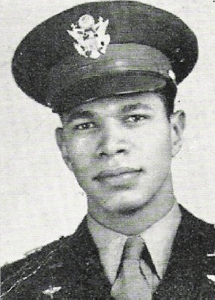
Cap. Andrew Maples, Jr.
Andrew Maples, Jr. was from in Orange, Virginia, and graduated from Hampton Institute in 1941 where he earned his silver wings and flew home to surprise his parents at the Gordonsville, Virginia Airport. He then enlisted in the Tuskegee Army Advanced Flying School and graduated on January 14, 1943. First Lieutenant Andrew Maples, Jr. was deployed with the 301st Fighter Squadron of the 332nd Fighter Group where he led a group of P-47 Thunderbolts on a bomber escort mission. Yet there was no sign of Maples after his fighter had a mechanical problem and he bailed. Lieutenant Maples was promoted to Captain and awarded an Air Medal while Missing in Action. The Army declared him dead and awarded him a Purple Heart the following year in June 1945.
Non Aviators
We may be widely known for training aviators, yet they couldn’t have flown without the help of other highly trained personnel. Their contribution is immeasurable; here are their stories.
Francis L. Horne, Sr.
Francis L. Horne was from West Palm Beach, Florida, and was sent to Tuskegee Army Air Field after he enlisted in the Army Air Corps in 1942. He was responsible for keeping P-40 and AT-6 aircraft flying and ensuring their radios were fully operational as a private first-class aircraft mechanic’s helper and aircraft radio repairman.
At the end of World War II, Horne became a Sergeant and joined the Army Reserve Officers’ Training Corps (ROTC) at Hampton Institute. He graduated with a Bachelor of Science in Vocational Industrial Education as a Second Lieutenant. He was recalled to active duty during the Korean War in 1951 and remained active until his retirement in 1969 as a Colonel. He continued his graduate studies at Hampton Institute, Old Dominion University, the University of Maryland, and Virginia Tech.
Awards and Legacy
Horne was awarded the Good Conduct Medal, World War II Victory Medal, National Defense Medal, the Army Commendation Medal, and the 2007 Congressional Gold Medal. He served as the the Chapter’s Speakers Bureau Chairman and spoke at over 200 events. He resided in Hampton for many years with his wife until they relocated to Pennsylvania, and he joined the Lonely Eagle Chapter.
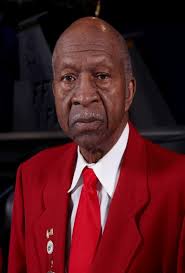
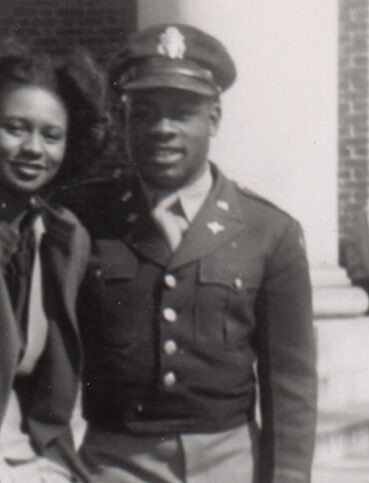
Dr. William Neal Brown
William Neal Brown was from Warrenton, Georgia, an excellent student who graduated first in his class in high school, yet was denied Valedictorian because of his color. He attended Hampton Institute as a double major in English and History, where he became a great debater. He later joined the Tuskegee Airmen program as a Special Services Officer in 1942 with the 618th Bomb Squadron after learning about the Pearl Harbor attack. Brown was assigned to boost the black pilots’ morale as they trained.
Dr. Brown went on to earn his Master’s degree in 1950 after the war ended, and he was discharged from the U.S. Air Force. He also earned his Doctorate and became one of the first African American faculty members at Rutgers University, New Brunswick, New Jersey. He served there for 33 years as a Professor of Human Growth and Development.
Awards and Legacy
Dr. Brown was awarded the Adams Debate Medal at Hampton Institute in 1938. He was also awarded various honors for his service as a Tuskegee Airman, including the 2007 Congressional Medal, the Tuskegee Airman Medal, and an American Flag to recognize his service as a Tuskegee Airman. Dr. Brown retired in 1989, yet continued observing people until he passed away on April 17, 2009, at 90 years old.
Sources
Henry Cabot Lodge Bohler
Behnken, Shannon (August 15, 2007). “Tuskegee Airman fought for equality in Tampa in 1960s.” Tampa Tribune, https://www.heraldtribune.com/story/news/2007/08/15/tuskegee-airman-fought-for-equality-in-tampa-in-1960s/28570408007/.
“Henry Cabot Lodge Bohler.” CAF RISE ABOVE, 13 April 2021, https://cafriseabove.org/39758-2/.
George Richard Bolling
“George R. Bolling I.” CAF RISE ABOVE, 10 January 2022, https://cafriseabove.org/george-r-bolling-i/.
Dr. William Neal Brown
“A Documented Original Tuskegee Airman, Biography: Dr. William Neal Brown.” https://tuskegeeairmen.org/wp-content/uploads/2021/06/2021-DOTA-Biography-Dr-William-Neal-Brown.pdf.
“Dr. William Neal Brown: Citations and Awards.” School of Social Work, Rutgers University, 2025, https://socialwork.rutgers.edu/node/1466.
Roscoe “Coach” Draper
“Roscoe DuBois Draper.” CAF RISE ABOVE, 22 April 2021, https://cafriseabove.org/roscoe-dubois-draper/.
Edward A. Gibbs
“Edward A. Gibbs: Aviation, Instructor and Businessman Born.” African American Registry, 12 December 2024, aaregistry.org/story/edward-a-gibbs-aviation-instructor-and-businessman-born/.
“Negro Airmen International Is Formed.” African American Registry, 6 February 2025, aaregistry.org/story/negro-airmen-international-is-formed/.
Vernon V. Haywood
“Col. Vernon Vincent Haywood.” National Air and Space Museum, 2025, airandspace.si.edu/support/wall-of-honor/col-vernon-vincent-haywood.
“Vernon V. Haywood.” CAF RISE ABOVE, 26 February 2020, https://cafriseabove.org/vernon-v-haywood/.
“Vernon V. Haywood.” Prima Air & Space, 30 December 2019, pimaair.org/hall-of-fame/vernon-v-haywood/.
Jerry T. Hodges, Jr.
Polston, Mike. “Jerry T. Hodges.” Encyclopedia of Arkansas, 19 March 2019, encyclopediaofarkansas.net/entries/jerry-t-hodges-8233/.
“Jerry Hodges.” CAF RISE ABOVE, 7 February 2023, https://cafriseabove.org/jerry-hodges/.
Milton Leroy Holmes
Holmes, Milton. “Memories of the Unexpected: The Story of a Tuskegee Airman.” 4 July 2013.
“Milton Holmes Obituary.” Legacy, 7 November 2018, https://www.legacy.com/us/obituaries/mycentraljersey/name/milton-holmes-obituary?id=10587895.
Francis L. Horne, Sr.
“A Documented Original Tuskegee Airman, Biography: Francis L. Horne, Sr.” https://tuskegeeairmen.org/wp-content/uploads/2021/09/Horne-Francis-Sr.-Sep-2021-Revised.pdf.
Veal, Breonna. “Tuskegee Airmen Recognized with Mural.” Joint Base Langley-Eustis, 22 June 2015, https://www.jble.af.mil/News/Article-Display/Article/843532/tuskegee-airmen-recognized-with-mural/.
Willis J. Hulbert
“A Documented Original Tuskegee Airman, Biography: Willis J. Hulbert.” https://tuskegeeairmen.org/wp-content/uploads/2021/09/Hubert-Willis-J._2020-DOTA-Biography-December-2020-Updated.pdf.
Walter Irving Lawson
“Walter Irving Lawson.” CAF RISE ABOVE, 16 June 2025, https://cafriseabove.org/walter-i-lawson/.
Wilmore B. Leonard
Nelson, Jabez. “Wilmore Leonard.” Archive for Racial & Cultural Healing Exhibit. Charles H. Chipman Cultural Center, 19 June 2023. https://www.chipmancenter.org/residents/cpt-wilmore-leonard.
Small, Clara. “Wilmore B. Leonard: Tuskegee Airman (1916-1978).” Beaches, Bays, and Waterways, 8 November 2023, https://www.beachesbayswaterways.org/storyways/wilmore-b-leonard-tuskegee-airman-1916-1978.
Andrew Maples, Jr.
“Andrew Maples Jr.” CAF RISE ABOVE, 26 October 2021, https://cafriseabove.org/andrew-maples-jr/.
Woods, Jayson. “Honoring the Memory of Captain Andrew Maples, Jr., Orange County’s Tuskegee Airman.” Orange County African American Historical Society, February 2022, https://www.ocaahs.org/post/honoring-the-memory-of-captain-andrew-maples-jr-orange-county-s-tuskegee-airman.
James Alonzo Walker
“James Alonzo Walker.” CAF RISE ABOVE, 24 June 2021, https://cafriseabove.org/james-alonzo-walker/.
Updated last on: November 25, 2025
Alumni
Despite the hardships and the criticism, our history drives us forward and proves our resilience. We continue to send professionals into the field. Learn more about our alumni and their accomplishments as we continue to strive for excellence.